Wu-Yue Culture
Introduction
Wu-Yue Culture refers to the cultural characteristics and contributions of the Wu and Yue states, which existed during the Spring and Autumn Period (770-476 BC) and the Warring States Period (475-221 BC). Located in the regions that now comprise modern-day Jiangsu, Zhejiang and Shanghai, the Wu and Yue states were known for their unique advancements in various fields such as art, architecture and governance. The culture of this region is distinguished by its contributions to Chinese bronze craftsmanship, silk weaving and distinctive philosophical ideas.
Historical Background
The geographical area is characterized by the Yangtze River and its tributaries, which provided fertile land and facilitated trade and communication. The states of Wu and Yue, although often in conflict, were strategically important and influenced by their interactions with other states, leading to a rich amalgamation of cultural practices.
Cultural Achievements
Bronze Craftsmanship
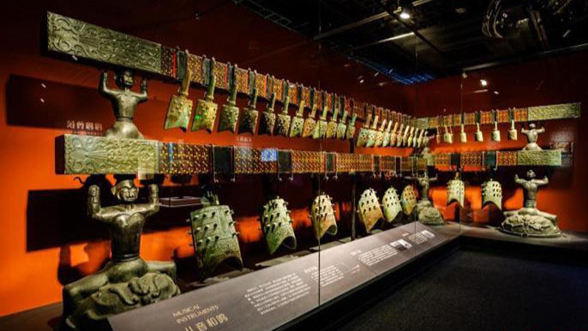
The Wu-Yue culture is renowned for its achievements in bronze craftsmanship. The exhibition "Bronze Age Civilization in the Yangtze River Valley" showcased over 518 pieces or sets of cultural relics, focusing on the Wu-Yue culture along with Ba-shu and Jing-chu cultures. The bronzeware from this region, including ritual vessels and weaponry, are noted for their intricate designs and technological advancements in casting techniques.
Textile and Silk Weaving
The Wu-Yue region is historically significant for its contributions to textile and silk weaving. The region's climate and resources were conducive to sericulture, and the silk produced became a vital part of trade, not just within China, but also along the Silk Road. The techniques and patterns developed in this region were highly regarded and contributed to the reputation of Chinese silk worldwide.
Artistic and Architectural Influence
The artistic contributions of the Wu-Yue culture include developments in sculpture, painting and architecture. The aesthetic values of the region are reflected in the refined and elegant designs seen in their artifacts. The architecture of the region was advanced for its time, incorporating unique features that influenced later Chinese architectural styles.
Philosophical and Political Ideas
The Wu-Yue culture also contributed to philosophical and political thought. Figures from this region played a role in the intellectual currents of the time, engaging with the ideas of Confucianism and Taoism. The political structures and governance strategies of the Wu and Yue states reflected an integration of these philosophies, often emphasizing meritocratic principles and strategic statecraft.
Legacy and Influence
The legacy of Wu-Yue culture is evident in the continuation of its artistic, technological and intellectual traditions. The region remains a significant cultural hub in contemporary China, with its historical contributions being celebrated and preserved in museums and cultural exhibitions. The influence of Wu-Yue culture can be seen in modern Chinese society in aspects ranging from art and fashion to governance and philosophy.








